

Filter Base Technology
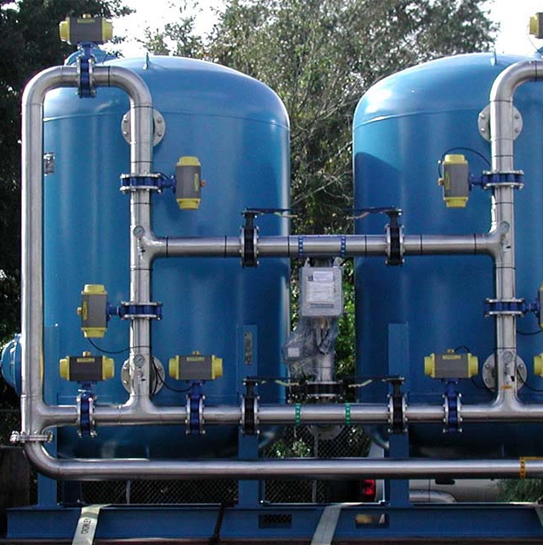
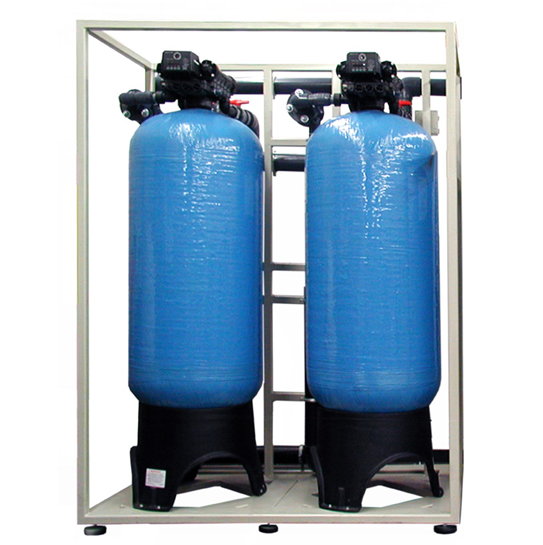
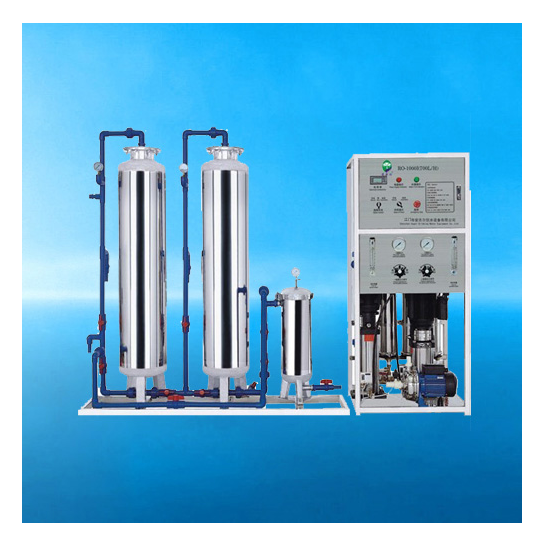
Sand / Multi grade filter
Filtration is the process of removing solids from a fluid by passing it through a porous medium. Coarse, medium, and fine porous media have been used depending on the requirement. The filter media are artificial membranes, nets, sand filter, and high technological filter systems. The choice of filters depends on the required filtering speed and the cleanness requirement. The flow required for filtration can be achieved using gravity or pressure. In pressure filtration, one side of the filter medium is at higher pressure than that of the other so that the filter plane has a pressure drop. Some portion of this filter type must be enclosed in a container.
The process of removing the clogged portion of the filter bed by reversing the flow through the bed and washing out the solid is called back washing. During this process, the solid must be removed out of the system, but otherwise the filters must be either replaced or taken out of service to be cleaned.
Carbon Filter
Carbon filtering is a method of filtering that uses a bed of activated carbon to remove contaminants and impurities, using chemical adsorption.
Each particle/granule of carbon provides a large surface area/pore structure, allowing contaminants the maximum possible exposure to the active sites within the filter media. One pound (454 g) of activated carbon contains a surface area of approximately 100 acres (40 Hectares).
Activated carbon works via a process called adsorption, whereby pollutant molecules in the fluid to be treated are trapped inside the pore structure of the carbon substrate. Carbon filtering is commonly used for water purification, in air purifiers and industrial gas processing, for example the removal of siloxanes and hydrogen sulfide from biogas. It is also used in a number of other applications, including respirator masks, the purification of sugarcane and in the recovery of precious metals, especially gold. It is also used in cigarette filters.
Active charcoal carbon filters are most effective at removing chlorine, sediment, volatile organic compounds (VOCs), taste and odor from water. They are not effective at removing minerals, salts, and dissolved inorganic compounds.
Typical particle sizes that can be removed by carbon filters range from 0.5 to 50 micrometres. The particle size will be used as part of the filter description. The efficacy of a carbon filter is also based upon the flow rate regulation. When the water is allowed to flow through the filter at a slower rate, the contaminants are exposed to the filter media for a longer amount of time.
Iron Removal Filter
Iron removal plants can be based on different filtration media, depending on the iron and manganese concentration, the oxygen level, CO2 content and hardness of the water.
Plant principle: First, air is injected in order to oxidize the iron. The oxidized iron will then precipitate on a sand filter. An MnO2 layer in the sand bed will catalyze the oxidation of residual iron. Backwash will be done by water and by air.